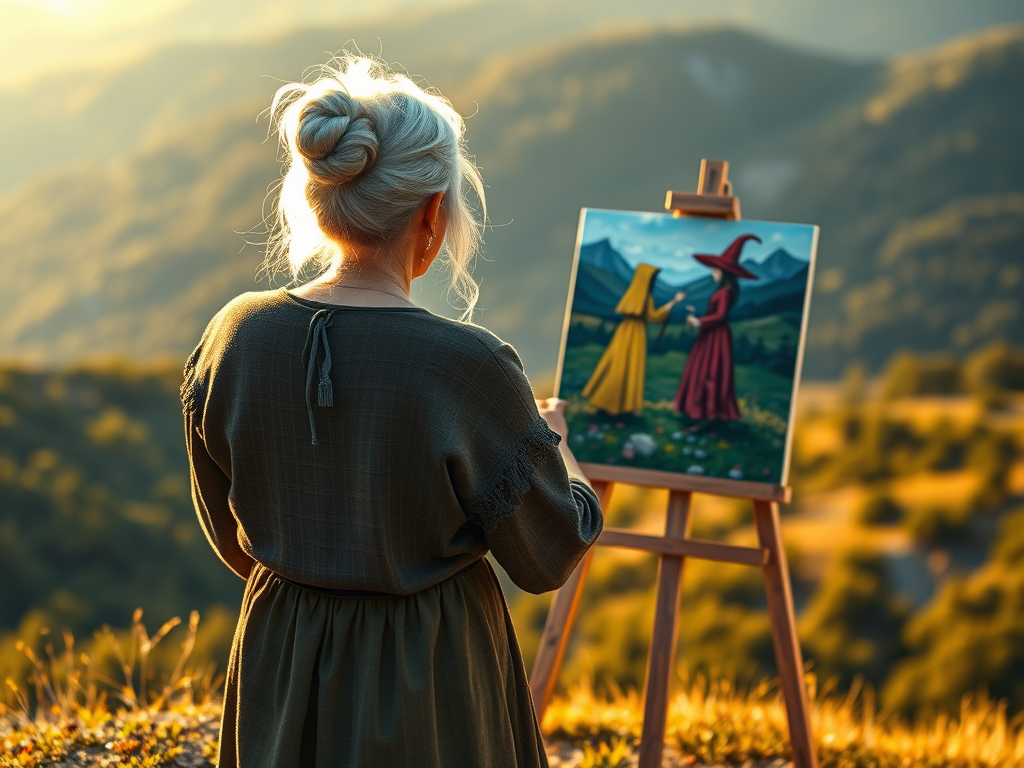
To get how freaking weird it is that a playful, pagan-adjacent solstice celebration ever existed here, smack in the middle of Natrona County, in the early part of the 20th century—much less that it persists today, nearly a hundred years later—you’d need to understand a little about the community in which it came into being
Casper—a geographically isolated town whose population expands and contracts with its oil economy—is no place for sissies. Its climate is rough on body and soul. Beauty can be found in its cottonwood-lined river and in the vast, rolling plains that unfurl to distant ranges. There may be beauty, too, in the gunmetal bleakness of the cold, howling winter, but you can’t see it when you’re straining against a March gale to make it across the parking lot from the Walmart Supercenter to your Rav4 before your purchases are ripped from your arms or you die1.
The town’s identity is rooted not in nature but in a romanticized cowboy mythos. This can be traced to Casper’s sheep and cattle ranching origins and to the fantasy of Manifest Destiny. Casper’s politics, civic life, social structures, and culture were formed around three refineries and the money, stench, and pollution produced by the ubiquitous extractive industrial complex.
The downtown was once coherent. A postcard image from 1938 depicts architecture typical of the era and the region: hotels, a Western Union, a dance hall, a cinema, a bootery, saloons. Then, throughout the ’70s and ’80s, many of the dignified (or at least interesting) older buildings were torn down—including, to my youthful despair, a stately Carnegie library upon whose front steps I loved to sit reading, my back pressed against a Doric column. A place to daydream. I suppose it simply had to go: Cut that out right now! No pretending you’re in a more charming city!
Around this same time, a stretch of formerly lively, central commercial blocks were replaced with an ill-advised, traffic-calming promenade. A mishmash of low-profile, utilitarian commercial structures, designed for durable mediocrity, came to line the half-deserted streets. They sprawled sparsely along the railroad tracks or river into weedy semi-industrialized stretches that gave way to lower-income pockets: little houses and manufactured homes with chain-link fences, barely holding their own on patches of dirt just down the way from a benonite plant, say, or a John Deere dealership and a drilling supply outfit.
As the redesign meant it now took too long to drive through center city—or to find parking there—people avoided it. Customers and their wallets were sucked away to shopping malls near the edges of town. If their vision was to destroy Casper’s heart, its local business district, decisionmakers did a great job.
Don’t get me wrong. There are plenty of pretty, tree-lined residential neighborhoods, and Casper has always been inhabited by—in addition to itinerant workers and those who have nowhere else to go—some profoundly civic-minded people. Those who keep the town improving and growing (think brew pubs, great coffee, bike paths, river walks, nice restaurants and little places featuring global cuisine, events venues, cultural and educational institutions) include—but are not limited to—entrepreneurs, educators and administrators, medical professionals, business owners, service providers, tradespeople, laborers, and retirees who contribute their leadership, expertise, time, and energy. The Casper of 2025 is also tethered to the rest of the world in ways not possible or imagined when I was growing up there; the internet and social media have closed distances and created connections and opportunities.
Yet, I press my point: many Casperites are—committedly, if you pay attention to posts you can’t help but run into if you browse the socials—proud of their hardiness, of their I don’t give a fuckness. They can be disparaging of Coloradoans, Californians, New Yorkers, tourists, and other perceived categories of candy-ass effetes. It may not be a hard place to grow up (it was great being a kid in Casper) but it IS hard-nosed. Whimsy is not its middle name.
That there rises a low, blue presence some five miles to the south—Casper Mountain— (technically an uplift, not a mountain) is a blessing, for it gives the town a visual anchor in the swelling emptiness of its surrounding basinlands.
That there are witches on the mountain is something of a wonder.
Neal
Neal Forsling was born Elizabeth Paxton in 1889, to a well-off family in Independence, Missouri. She married a man named David Oglibee, and they started a family. Eventually, the couple separated (uncommon, even shocking at the time). The divorced mother of two filed a claim on 640 acres on the southeastern side of Casper Mountain, where pine and aspen give way to sagebrush and red-breaking cliffs, the view spilling away across a valley to wide, pale plains and far-off ridges.
The story of how Neal got to Wyoming, then to Casper, and how she first encountered the place she’d call home for the rest of her life can be found here, in this transcript of an obscure interview with historian Rebecca Hunt and Neal’s granddaughter, Laura Bjorkman, on the podcast Re-storying the West—a find I somehow managed to scratch up online.
Neal dubbed her homestead Crimson Dawn. I’ve never been up there at daybreak, but no doubt the rust-hued earth glows brightly when the sun first hits it. In 1929, in her one-room cabin, she first hosted a simple Midsummer’s Eve party for her family and some neighbors. She’d invented a cast of supernatural mountain beings—witches, elves, spirits—and built little shrines to each.
Radio was increasingly common in households across the country, but it’s unlikely there was a signal on Casper Mountain. TV was still just a twinkle in Philo Farnsworth’s eye. Rural entertainments included—besides reading—fairs, circuses, dances, local sports; movies, picnics; storytelling, and informal theatre. Neal’s gathering counted as such. The children loved her animated, immersive folklore; the adults did, too.
The following year, she invited more people. Soon, the whole town was showing up. Before modern vehicles, the trip must’ve been daunting. From Casper up to Crimson Dawn wasn’t far in miles—about eight, I’d venture—but on the narrow, rutted mountain track it could have taken thirty or forty minutes depending on the vehicle and the weather.
Costumed witches always greeted arriving guests. There was cider or hot chocolate, a processional, the telling of tales and fortunes, a bit of playful chanting and, as the day ended, a blazing bonfire atop a butte.
I don’t know when Elizabeth changed her given name. In the late ’20s, she remarried—a good guy by all accounts, many years her junior—Jim Forsling, who was still a young man in his thirties when, tragically, he froze to death: his car broke down on his way back to Crimson Dawn after a supply run to Casper.
Now a grieving widow, Neal kept their cabin and lived there in the summers—it was her studio, too; her work hung everywhere—and maintained the solstice tradition, which (remarkably, as I pointed out earlier) still thrives today.
Witches of the Wild West
According to scholar Audrey Watters, James Frazer’s The Golden Bough—a touchstone of early twentieth-century pagan revival—was one of a few books Neal had brought with her to the mountain. Its influence still glimmers in Crimson Dawn’s bonfire, its sense of thinned boundaries between worlds, and its partly tongue-in-cheek divination rituals. Neal’s Shrine of the Heart’s Desire nods to Midsummer’s associations with love and luck… and, as in many European tales, the stories and rites of Crimson Dawn feature witches and fairies who cross into human life (although Neal reversed the traditional character of witches: hers are guardians of the mountain: stern at times; never wicked).
She understood the cultural weight witches carry—from Salem to Oz—and folded that tension into her stories. One of her creations, for instance—the Cardinal Witch—supposedly fled seventeenth-century Italy after being persecuted as a “wise woman,” echoing the histories of herbalists and midwives maligned as threats.
Casper kids, teenagers, and young adults vie for the chance to play roles. Or maybe that has changed; maybe today, it’s not considered fun or cool. IDK. But for several summers when I was an adolescent—thanks to my friend Julie Street, who lived on the mountain—I was thrilled to be Undine, the Homesick Sea Witch. Decked in blue and purple tulle with a netlike shawl and seashell headdress, I darted, along with my costumed friends, between pines, appearing and disappearing for the delight of the crowd. Tomboy, yes, but I liked flitting around feeling magical.
Neal dressed as a witch during the festival but never claimed the identity outside solstice. She knew precisely the line she walked.
After her death, that line wavered. In 1989 and 1990, Sonlight Ministries—an evangelical group—protested the festival, calling it forbidden witchcraft. They attempted to shout down Neal’s daughter, Mary Martin, as she led the procession, marking the first real challenge to the tradition. But their protests fizzled quickly; most Casper residents rejected the idea that Crimson Dawn was satanic. Interviewed attendees described the celebration as “simple,” “pure,” or “just stories.” Even clergy framed it as mythic entertainment, not a spiritual threat. The controversy evaporated, leaving the event more firmly rooted than before. Organizers did, however, make small symbolic shifts: One year at least, the celebration opened with the Lord’s Prayer in Indian Sign Language, meant to honor multiple heritages.
Solstice
Neal had long distanced her ritual from “barbaric” ancient practices, insisting her witches lived in stories, not creeds. Solstice observances worldwide mark the rhythms of the planet. On Casper Mountain, where winter overstays its welcome, the solstice truly feels like the turn toward warmth. Neal’s early gatherings were partly celebrations of nature and of survival.
Across the country, solstice festivals have grown dramatically—Burning Man being the biggest example cited by Watters. Burning Man began as a small fireside ritual on a beach in San Francisco and grew to tens of thousands of attendees. By contrast (and by design) Crimson Dawn has remained local and intimate. The site can’t handle huge crowds, and the community seems uninterested in turning it into a big spectacle, although tourists and other visitors are welcome.
Festivals give rise to what anthropologist Victor Turner calls communitas—moments when hierarchy dissolves, and people share an uncommon unity. Crimson Dawn effects this beautifully: mountain residents, town families, New Age wanderers, longtime friends, and first-time guests from all over the country and world walk the same trail, laugh at the same jokes, and warm their hands at the same bonfire, sharing a sense of participation in a traditional observance that is both playful and meaningful; otherworldly and grounded; sacred and profane, and somehow soul-enlarging.
Crimson Dawn endures because the community keeps it alive. The Crimson Dawn Association maintains the shrines, costumes, museum, and archives. Volunteers pour the hot chocolate. Even Casper locals who’ve never attended might tell you—with a serious expression and a wink—that the mountain is haunted.
Sanctification—and the defiance of classification—as resistance
Crimson Dawn is a place, a collection of stories, and a tradition. It is also a testament to the power of creativity, and an improbable site of liminal truce between witches and cowboys, pagans and pioneers, ecology and extraction.
Wyoming’s frontier mythology centers on land. Neal wove landscape and geology into her tales: yellow stones signaled the Topaz Witch; green minerals became “witch jade”; a glittering mica cave housed the Cardinal Witch. In that sense, Crimson Dawn fits: it feels grounded, frontier-ish, yet is gently subversive.
Neal criticized the development creeping up the mountain; Watters writes that she joked the witches hated the bulldozers. Still, she never blamed the people themselves. Through her fairy-tale frame, she conveyed ecological truths without igniting political backlash. In 1973, when civilization threatened Neal’s haven, she took action. On her eighty-fourth birthday, she deeded one hundred acres, including her cabin and shrines, to Natrona County. The stipulation was that the annual Midsummer festival had to continue, and her cabin must become an interpretive center. If her wishes were not honored, the land would revert to family.
Crimson Dawn thereby became both preserved land and public park. The county added an interpretive trail and turned Neal’s cabin into a pioneer museum in 1980, offering tourists a cleaner, safer narrative.
Perhaps because of that—what Performance scholar Richard Schechner called undecidability, a refusal to adhere to established categories—Crimson Dawn often slips between the cracks of official Wyoming tourism, which prefers cowboys, mountain men, and rodeos. As folklorist Dan Ben-Amos writes (quoted in Watters), myth is treated as true, legend as possibly true, folktale as untrue. Crimson Dawn, labeled a folktale, is considered harmless fantasy, even as it subtly challenges long-held frontier stories about gender, power, and piety.
Media coverage has followed that ambivalence. For years, newspapers ignored the event, then sensationalized it with talk of ogres and trolls—figures nowhere in Neal’s canon. Only when the site became a monument did journalists at last adopt the language of “legacy” and “legend.”
Neal Forsling was an uncommon person and an improbable historic figure: artist, divorcée and single mother, homesteader, Depression-era survivor, airplane mechanic (during World War II), and fantasist, she resembled a modernist heroine more than a pioneer matron.
I’m so glad to have met Neal when I was young, and grateful to have taken part in her solstice celebration for at least a couple of seasons. While I never knew her well—only as the woman on the mountain; the artist and storyteller whose imagination gave rise to one of Casper’s most unlikely, enduring, and unifying annual observances—I remain in awe of her today.
Notes
Sources: Flora Neale is my fictional version of Neal. She’s a character in my novel, Cowboy State (Blydyn Square Books, forthcoming 2027). Hoping to add depth and color to my depiction of Flora while honoring her original, I went a-Googling Neal Forsling, hoping somebody had written stuff about her.
Many have. Neal herself wrote Crimson Dawn: The Story of the Casper Mountain Witches. Karen Snyder created her documentary, A Woman to Match a Mountain, in 2008. Historian Rebecca Hunt—who was the Crimson Dawn storyteller until recently, and who is a trove of information ranging from the intimate to the larger contexts— has woven stories of and by Neal into talks and presentations and is working on a book; I had the pleasure of interviewing her a couple of years back.
Audrey Watters’ scholarship—upon which I’ve drawn heavily in this post— illuminates Neal’s biography and the meaning of her work in ways that converge beautifully with the currents that run through my novel. She closes her thesis with Lucy Lippard’s observation that “every place name is a story,” and that land without stories becomes invisible. Crimson Dawn has become one of the places, one of the stories through which Casper in all its dimensions becomes visible and better knows itself.
Crimson Dawn Park and Museum Facebook page here
Further viewing and reading
“A Woman to Match a Mountain (Documentary film). Directed by Karen Snyder, 2008. [Independent production]. Reviewed here
Forsling, Neal. Crimson Dawn: The Story of the Casper Mountain Witches.
[Glenwood], [1980].
Harris, Michelle. “On Wyoming’s Casper Mountain, the Crimson Dawn Witches Appear Every Midsummer’s Eve.” Atlas Obscura, 19 June 2023.
Hunt, Rebecca. “Casper, Wyoming.” WyoHistory.org, Wyoming State Historical Society, https://www.wyohistory.org/encyclopedia/casper-wyoming. Accessed 13 Dec. 2025.
Restorying the West Podcast. Restorying the West, https://www.restoryingthewest.org/podcast. Accessed 13 Dec. 2025.
Schechner, Richard. Performance Theory. Rev. and expanded ed., Routledge, 2003.
Watters, AudreyVanderford. Pagans & Pioneers: Celebrating the Summer Solstice in Casper, Wyoming. 1999. Master’s thesis, [University of Oregon].
- Yeah, yeah, you big guys, back off: in my lifetime, Wyoming wind has in fact knocked me off course; blown my actual shoes off my actual feet; landed me on all fours and flung my flailing self across icy roads and down embankments. Not exaggerating. ↩︎

 Janna L. Goodwin